
How to Determine Variability in a Dataset
Variability measures: Range, Interquartile Range, Variance, and Standard Deviation
Variability is about how far data points are from each other and the mean. In addition to measures of central tendency, variability measures are other critical, descriptive statistics epitomizing your data.
Variability can also be expressed as spread, scatter, or dispersion. We use the following variables to measure the variability. The first measure is the range, the difference between the highest and lowest values in a given data set. However, the interquartile range yields the middle half of the distribution. In other words, it is the difference between the upper and lower quartiles. The standard deviation is the most used variability, calculated by determining the average distance from the mean. Variance is a derived measure and can be calculated by taking the square of the standard deviation.
What makes variability utterly critical?
The central tendency, mean, median, and mode depict where most data points concentrate, while variability illustrates how far they are. It is exceedingly crucial because the amount of variability demonstrates the generalization one can make from the sample to the population.
Low variability is desirable because it implies that predicting information about the population using sample data is well-justified. Contrarily, high variability illustrates decreased consistency, making data predictions harder.
Some data sets may have the same central tendency with different levels of variability. The reverse can also be true. Suppose you know the central tendency or the variability but not both; you cannot interpret the other. Thus, they both complete your data assessment.
Range
The range depicts the difference between the maximum and minimum values in the distribution. Even though it is easily calculated, it may not reflect the overall trend in the data because it only considers the highest and lowest values in the data set, not yielding any information on the other values in the data set.
Interquartile range
Theinterquartile range differs from the range in that it gives you the variation in the middle of your distribution. It tells us more about the distribution because it contains half of the values in the middle. After calculating the first and third quartile in your data set, you can determine the interquartile range by subtracting the higher value from the lower one. The first quartile includes the first 25% of the values, while the third quartile encompasses the last 25%. Even though the interquartile range only involves the difference between the two values, it is more robust against outliers because they portray the middle half of the data set. Therefore, the interquartile range is reliable in both normal and skewed distributions.
Five-number summary
For every distribution, afive-number summary can be calculated. It includes the minimum, the lower quartile, the median, the upper quartile, and the maximum. The five-number summaries can be readily depicted with box and whisker plots.
Standard deviation
The standard deviation shows the average amount of variability in the dataset. Therefore, it illustrates, on average, the distance of each score lies from the mean. As the standard deviation, so is the variability in the data set.
Variance
Variance demonstrates the degree of spread for a given data set, suggesting that a greater spread would imply a larger variation for the mean. The varianceis calculated by squaring the standard deviation. It has a different unit from the standard deviation, making its interpretation more challenging. However, it is beneficial for some crucial analyses, such as Analysis of Variance, where the whole analysis depends on the ratio between-group and within-group variance.
How can we determine the ideal measure of variability?
Determining the ideal measure of variability depends on the level of measurement and distribution. For the data measured at an ordinal level, the appropriate measures of variability include the range and interquartile range. In contrast, the standard deviation and variance can also be calculated at interval and ratio levels.
The relevance of distribution
All measures can be employed for normal distributions. The standard deviation and variance should be preferred because they consider all the data in a set but simultaneously suggest that outliers can affect them. However, the interquartile range is most reliable when the distribution is skewed because the outliers do not affect this variable.
If you need us to make your thesis or dissertation, contact us unhesitatingly!
Best Edit & Proof expert editors and proofreaders focus on offering papers with proper tone, content, and style of academic writing, and also provide an upscale editing and proofreading service for you. If you consider our pieces of advice, you will witness a notable increase in the chance for your research manuscript to be accepted by the publishers. We work together as an academic writing style guide by bestowing subject-area editing and proofreading around several categorized writing styles. With the group of our expert editors, you will always find us all set to help you identify the tone and style that your manuscript needs to get a nod from the publishers.
English formatting service
You can also avail of our assistance if you are looking for editors who can format your manuscript, or just check on the particular styles for the formatting task as per the guidelines provided to you, e.g., APA, MLA, or Chicago/Turabian styles. Best Edit & Proof editors and proofreaders provide all sorts of academic writing help, including editing and proofreading services, using our user-friendly website, and a streamlined ordering process.
Get a free quote for editing and proofreading now!
Visit our order page if you want our subject-area editors or language experts to work on your manuscript to improve its tone and style and give it a perfect academic tone and style through proper editing and proofreading. The process of submitting a paper is very easy and quick. Click here to find out how it works.
Our pricing is based on the type of service you avail of here, be it editing or proofreading. We charge on the basis of the word count of your manuscript that you submit for editing and proofreading and the turnaround time it takes to get it done. If you want to get an instant price quote for your project, copy and paste your document or enter your word count into our pricing calculator.

24/7 customer support | Live support
Contact us to get support with academic editing and proofreading. We have a 24/7 active live chat mode to offer you direct support along with qualified editors to refine and furbish your manuscript.

Stay tuned for updated information about editing and proofreading services!
Follow us on Twitter, LinkedIn, Facebook, Instagram, and Medium.
For more posts, click here.
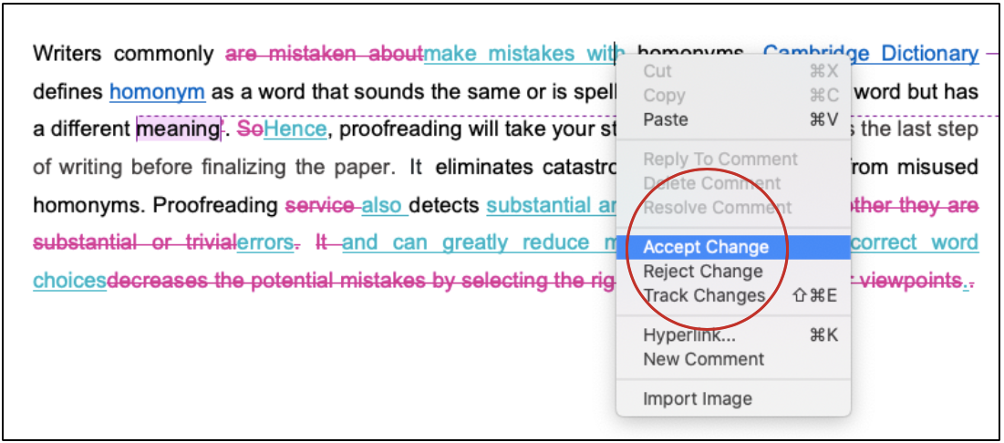
This article explains how to determine variablity in a dataset. To give you an opportunity to practice proofreading, we have left a few spelling, punctuation, or grammatical errors in the text. See if you can spot them! If you spot the errors correctly, you will be entitled to a 20% discount.
Categories
- APA Style
- Editing & Proofreading
- Citation Styles
- Grammar Rules
- Academic Writing
- Formatting
- Plagiarism
- Editing
- Proofreading
- Microsoft Tools
- Academic Publishing
- MLA Style
- Dissertation & Thesis
- Researching
- Job & Research Application
- Statistics
- Academic Tools & Resources
Similar Posts
-
How to Determine Central Tendency
19.02.2023
-
ANOVA vs MANOVA: Which Method to Use in Dissertations?
30.01.2023
-
How to Specify Study Variables in Research Papers?
14.01.2023
-
Population vs Sample | Sampling Methods for a Dissertation
14.01.2023
-
7 Issues to Avoid That may Dent the Quality of Thesis Writing
18.12.2022
-
How to Ensure the Quality of Academic Writing in a Thesis and Dissertation?
04.12.2022
Recent Posts
-
How to Write an Abstract for a Qualitative Research Paper
18.05.2026
-
Abstract Keywords: How to Choose Them for Maximum Discoverability
18.05.2026
-
How to Write a Cover Letter for Journal Submission
18.05.2026
-
Cover Letter Mistakes to Avoid in Academic Applications
18.05.2026
-
Writing an Abstract in English as a Non-Native Speaker
15.05.2026
They Also Read

October 14, 2023
Embarking on an academic work is obligatory for every college student who wants to graduate one day. Such an academic work is considered one of the final and most fundamental practices in the curriculum for college students. Some students who embark on their academic writing projects may not actually be aware of the mistakes (whether trivial or vital) that may delay their graduation or cause them to lose marks, or points in their assignments. So, college students should pay attention to these tips to avoid making the errors herein discussed.
Continue Reading
October 14, 2023
A good part of any research depends on the right questions asked. If you are asking wrong questions, your entire research may go off track. Therefore, understanding what questions you need to ask is essential for your research. If you are on the way to your research but don’t know how to start framing the right research questions, we have just the right information for you. This article discusses the process of formulating research questions.
Continue Reading
October 14, 2023
Essays are a principal component of academic writing. Scholars and students need to write a plethora of essays on a recurring basis as a core requirement of their research or curricula. Depending on the writing purpose, these essays can be persuasive, narrative, descriptive, or expository. This article expounds on expository essays and suggests some helpful steps to write an expository essay.
Continue Reading
October 14, 2023
A thesis statement is the main academic argument of the thesis that distills the central idea of the study informing the readers about your stance on your thesis topic and is therefore an integral part of writing the thesis. When writing a thesis statement, there are several contentions regarding the right approach. And understandably so, for there are no definite writing rules. But there certainly are writing best practices. In this article, we will look at some of these best practices and how you can leverage them to write a formidable thesis statement. But prior to that, let’s understand what a thesis statement is.
Continue Reading
October 14, 2023
You discuss and explore your results' prominence, meaning, and relevance in the discussion chapter. Therefore, you should concentrate on what you have found and explain and assess how your findings relate to your literature review and research questions.
Continue Reading